



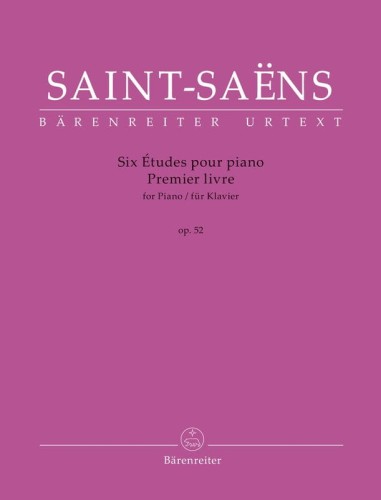
Camille Saint-Saens: Six etudes pour le piano op. 52 - Premiere livre - 6 etiud księga pierwsza - nuty na fortepian
 Opis
Opis
Jeden z dojrzałych utworów Saint-Saënsa, „Sześć Etiud na fortepian” op. 52, ukazał się w 1877 roku, mniej więcej w tym samym czasie co jego opera „Samson i Dalila”. Druga etiuda z cyklu została pierwotnie napisana w 1868 roku dla „École du pianiste”, francuskiego wydania metody fortepianowej Leberta i Starka. Kompozytor, który po raz pierwszy podjął się kompilacji etiud fortepianowych, najwyraźniej celowo chciał odróżnić cykl od charakteru błyskotliwej etiudy koncertowej: każda z etiud poświęcona jest jednej lub kilku konkretnym trudnościom lub technikom kompozycyjnym, podobnie jak w fugach. Poszczególne utwory zadedykował słynnym wirtuozom swoich czasów, takim jak Anton lub Nikołaj Rubinstein czy Marie Jaëll. Nowe wydania Urtext oparte są na przełomowym tekście muzycznym „Œuvres instrumentales complètes” Camille'a Saint-Saënsa, dla którego redaktor skrupulatnie ocenił wszystkie znane źródła. Szczegółowa Przedmowa dostarcza informacji o genezie i znaczeniu etiud. Odczyty i warianty są precyzyjnie udokumentowane w Komentarzu Krytycznym (ang.). Uwagi dotyczące interpretacji (fr./ang./niem.) oraz elegancki grawerunek muzyczny zapewniają pianiście optymalne warunki do studiowania tych wirtuozowskich etiud.
Przełomowy tekst muzyczny oparty na „Œuvres instrumentales complètes” Camille'a Saint-Saënsa
Obszerna Przedmowa o genezie i znaczeniu etiud (fr./ang./niem.) oraz Komentarz Krytyczny (ang.)
Z uwagami dotyczącymi interpretacji (fr./ang./niem.)
[tłumaczenie automatyczne]
One of Saint-Saëns' mature works, the "Six Études pour piano" op. 52, appeared in 1877 around the same time as his opera "Samson et Dalila". The second etude of the cycle was originally written in 1868 for the “École du pianiste”, the French edition of the piano method by Lebert and Stark. With his collection, the composer who had embarked on a compilation of piano etudes for the first time, evidently wanted to deliberately? distinguish the cycle from the character of the brilliant concert etude: Each of the etudes is devoted to one or more specific difficulties or compositional techniques, as in the fugues. He assigned the individual pieces to famous virtuosos of his time, such as Anton or Nikolai Rubinstein or Marie Jaëll. The new Urtext editions are based on the ground-breaking musical text of the "Œuvres instrumentales complètes" by Camille Saint-Saëns, for which the editor has meticulously evaluated all known sources. A detailed Foreword provides information on the genesis and significance of the etudes. Readings and variants are precisely documented in the Critical Commentary (Eng). Notes on interpretation (Fr/Eng/Ger) as well as an elegant music engraving provide the pianist with optimal conditions for studying these virtuosic etudes. - Ground-breaking musical text based on the “Œuvres instrumentales complètes” by Camille Saint-Saëns - Extensive Foreword on the genesis and significance of the etudes (Fr/Eng/Ger) and a Critical Commentary (Eng) - With notes on interpretation (Fr/Eng/Ger)
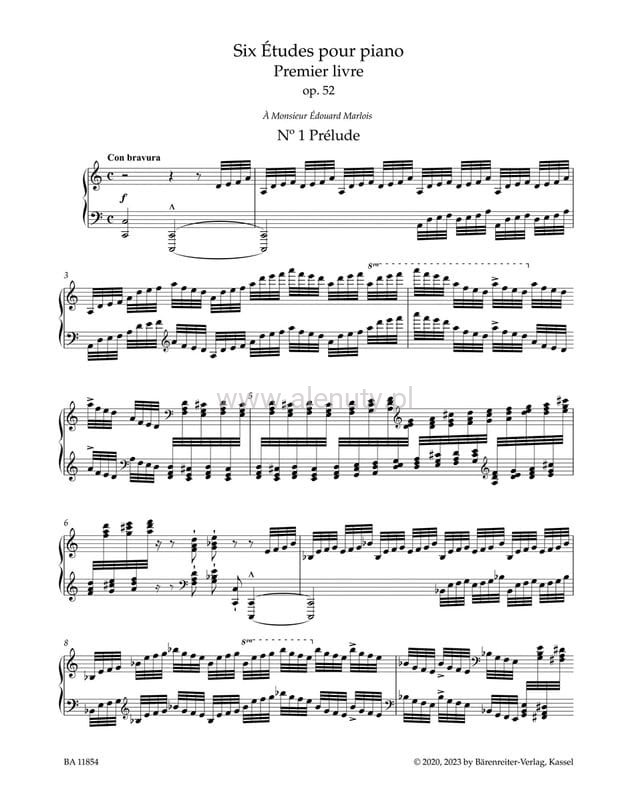
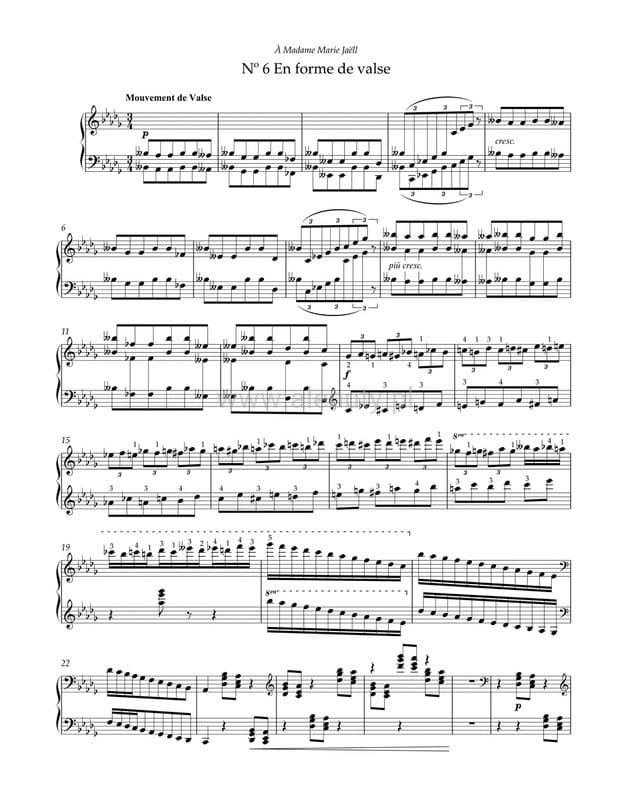
Zobacz przykładowe strony w galerii produktu. Pomogą one określić poziom trudności. Znajdziesz tam również inne dodatkowe informacje.
Spis treści:
1. No 1 Prélude [Camille Saint-Saëns]
2. No 2 Pour l’indépendance des doigts [Camille Saint-Saëns]
3. No 3 Prélude et fugue en fa mineur [Camille Saint-Saëns]
4. No 4 Étude de rythme [Camille Saint-Saëns]
5. No 5 Prélude et fugue en la majeur [Camille Saint-Saëns]
6. No 6 En forme de valse [Camille Saint-Saëns]
Tytuł: Six Études for Piano op. 52
Autor: Camille Saint-Saens
Stopień trudności: dla zaawansowanych
Instrument: fortepian
Notacja muzyczna: zapis nutowy
Wydawnictwo: Barenreiter
Format: XIX, 50 S., 31,0 x 24,3 cm, miękka oprawa
Język wydania: angielski, niemiecki
ISBN / ISMN: 9790006576067
Kod wydawcy: BA11854
Atrybuty
| Styl muzyczny | klasyka |
| Instrument | Fortepian / pianino |


Wyświetlamy wszystkie opinie (pozytywne i negatywne). Nie sprawdzamy, czy pochodzą one od klientów, którzy kupili dany produkt.